A video looking at the emergence of systems thinking as an essential core skill in today’s workplace
Uncategorized
The joy of creating

Whilst I am in the midst of family bereavement at the moment, I have also managed to embrace an exciting and invigorating week that has reawakened in me the joy of creating. Creating insight expressed in writing. Creating new and different ways of looking at things, of putting them together and making them useful. Creating and producing something that is uniquely me.
If you have ever created anything yourself, you will know how it feels. The buzz, the insight, the pure joy of opening up a whole new world that previously went unseen. I talk in Creating the Conditions for Change© about the systems practitioner as the invisible catalyst. Invisible to the outside world, maybe, but visible, large as life, inside of you. In your heart and in your mind.
I have explored the head, the heart, consciousness and how we learn. I have undertaken exercises in reframing – particularly reframing the word ‘jealousy’ to ‘following and admiring’. If you ever thought someone was acting out of jealousy towards you, reframe it to them admiring and following you or wanting to be you and you see their actions very differently as you call your power back to you.
Reframing is a particular skill for a systems practitioner. It is part of our practice of boundary critique and it can shift situations significantly and open up new and unexpected avenues for development, change, improvement and/ or a new direction.
I have met with academics and talked about reflexivity, metaphor and storytelling. I have discussed bridging the gap between theory and practice.
I have moved Creating the Conditions for Change© on again and we are starting to head in some unusual directions. I was asked what I like best about what I do. There are many things, of course, but I like the insight and stimulation from creating something different and new. Of putting new information together in different ways.
The creators will always be at the forefront. It does not feel comfortable sometimes, as I talk about in the book ‘Crossing the Bridge’. The journey of a systems practitioner can be a lonely one. We are mavericks, square pegs in round holes, ‘different’. We will, however, always have the joy of creating.

Video links for ‘Crossing the Bridge’
Welcome to ‘Crossing the Bridge’ – a systems thinking practitioner’s learning journey https://www.youtube.com/watch?v=KKRW37rGbUc
A human touch online https://youtu.be/PxHyVPKyH8I
Who are the systems thinkers in systems change work? https://youtu.be/Q96XeUipNX0
Love and social connection in systems change: https://youtu.be/RA_x33jvBOE
Hidden gems: https://youtu.be/HPkCgfCg2qo
Power struggles in systems change: https://youtu.be/TOlocZo6U7Y
Insights from a systems thinking approach: https://youtu.be/sXnsqu95PqY
On first introduction to the viable system model: https://youtu.be/K3oroJzDYwc
On first introduction to the viable system model – with subtitles https://youtu.be/BJmeaBy68No
Rabbits in the headlights https://youtu.be/YrCzzZhjYw4
Applying systems thinking to commissioning https://youtu.be/V3_SuOtZNGk
My systems thinking approach https://youtu.be/gwctoLVQcNo
Reflections on being an evaluator https://youtu.be/oVO7wPvjRZU
The Invisible practitioner https://youtu.be/DDcOFjnY6_o
The invisible practitioner – with subtitles https://youtu.be/u4iiMQyhzdE
The emotional journey of the systems thinking practitioner https://youtu.be/Lo5Z0laDS1E
What value can a systems thinking practitioner bring to the workplace? https://youtu.be/mhCQaftz32Q
Creating the Conditions for Change© – reciprocation https://youtu.be/6BMezA5e2mg
Where did Stafford Beer go?
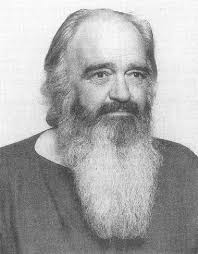
Yes, I know he is dead. But where did he go? Over the years from him practicing, where did ‘he’ go? Let me explain…
I am a qualified Systems Practitioner. I have a wealth of experiential and academic learning in the field of systems thinking. Something I use a lot is Stafford Beer’s Viable System Model. I know it technically. I use it in my work and have done for many years. I learnt it as part of my BSc and then my MSc. Never, during my formative years, did I pick up from those more experienced than me, the extent of deep spirituality and love which formed part of Stafford Beer himself. What I did pick up was an elitist atmosphere of those who ‘knew’ the model and those who were deemed ‘enthusiastic amateurs’ by others. They knew what the model was, but did not know how to use it. It was all about the model. Nothing but the model.
But, with every model comes a person. With every approach comes a person. There is one thing that I have learnt in my years as a Systems Practitioner is that people love to take an approach and erase the person behind it. However, it is the person and their values, their ethics, their thoughts, their deep feelings and ethos in life that makes an approach. Not a model drawn on a piece of paper.
A number of years ago I realised just how versatile the Viable System Model was when I used it for continuing development of myself, as part of an OU PDP course. I then turned my use of the Viable System Model into my systems thinking approach, Creating the Conditions for Change©. This approach is very ethically driven. It aims to bring humanity back into our working lives. It respects individuals and all of the values and gifts they bring with them to the party. It focusses on the people in the situation and it came directly from my learning from using the Viable System Model. One of the words that comes up most often when I engage with groups using the Creating the Conditions for Change© approach is the word ‘love’. Over and over again. This is to do with how I practice and encourage others to ‘be’ in a situation.
So, when sitting in a Metaphorum webinar this month hearing Vanilla Beer talk about the spiritual side of Stafford Beer, I believed that we had somewhat lost the man behind the approach as the years had gone by. Over the last year, I have had a couple of people approach me who know my work and have said that they knew Stafford Beer and they believed he would have liked where I was going with this work. I cannot say whether I agree with them or not as I never knew him myself. However, I do think we have lost the spiritual side of the Viable System Model somewhat and I believe my work is reinvigorating that side of things.
In the Metaphorum conference, Vanilla Beer said, ‘You cannot point to the VSM and say ‘love’.’ On the contrary, I think you absolutely can.

 systems practitioner Ltd