It is not written in a technical or academic way, but in a way that I think will appeal to those who are interested in a practitioner’s journey. I cover what it has been like to venture into the world of work as a systems thinking practitioner – how systems thinking was received or wasn’t as the case might have been. I discuss the often talked about, but rarely written down, aspects of the journey.
It is a book of four distinct parts:
The first part is about the formative years of my systems practice and how I started to embed systems thinking concepts and habits into my practice. It is written in the style of a memoir of my experiences.
Part three is specifically about the practitioner’s journey. This is where I discuss some of the common things that systems thinking practitioners have to contend with. They are the things that people ask me about the most. The things people find difficult to deal with and the things that can put some people off practicing. Hopefully, by sharing stories about these things, it will encourage others to keep going with their own journey.
The final part is about the things I am contemplating now that I am on the next stage of my systems thinking and practice journey. What appeals to me as I am moving forward into a new place in my learning?
The book aims to give insights into the real on the ground experiences of a systems thinking practitioner. It is also aimed at encouraging others not only to continue with their own journey, but to find ways to share it. Some of the greatest value that systems thinking practitioners can bring to a situation is often not talked about. Some of it is exposed in the book as I celebrate my learning journey and the wisdom of those I have engaged with along the way.
Crossing the Bridge – coming soon on Amazon. Exact launch date to be confirmed.
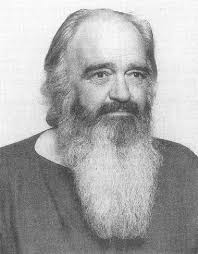
Yes, I know he is dead. But where did he go? Over the years from him practicing, where did ‘he’ go? Let me explain…
I am a qualified Systems Practitioner. I have a wealth of experiential and academic learning in the field of systems thinking. Something I use a lot is Stafford Beer’s Viable System Model. I know it technically. I use it in my work and have done for many years. I learnt it as part of my BSc and then my MSc. Never, during my formative years, did I pick up from those more experienced than me, the extent of deep spirituality and love which formed part of Stafford Beer himself. What I did pick up was an elitist atmosphere of those who ‘knew’ the model and those who were deemed ‘enthusiastic amateurs’ by others. They knew what the model was, but did not know how to use it. It was all about the model. Nothing but the model.
But, with every model comes a person. With every approach comes a person. There is one thing that I have learnt in my years as a Systems Practitioner is that people love to take an approach and erase the person behind it. However, it is the person and their values, their ethics, their thoughts, their deep feelings and ethos in life that makes an approach. Not a model drawn on a piece of paper.
So, when sitting in a Metaphorum webinar this month hearing Vanilla Beer talk about the spiritual side of Stafford Beer, I believed that we had somewhat lost the man behind the approach as the years had gone by. Over the last year, I have had a couple of people approach me who know my work and have said that they knew Stafford Beer and they believed he would have liked where I was going with this work. I cannot say whether I agree with them or not as I never knew him myself. However, I do think we have lost the spiritual side of the Viable System Model somewhat and I believe my work is reinvigorating that side of things.
In the Metaphorum conference, Vanilla Beer said, ‘You cannot point to the VSM and say ‘love’.’ On the contrary, I think you absolutely can.
We’re tired, aren’t we? All of us. Exhausted, some of us. We live our lives at a pace that barely gives us time to stop and think. Barely gives us time to consider our own health and wellness. Barely gives us time to contemplate saying, ‘no’. The work I have been doing in systems change exemplifies this. People are tired. Exhausted. They want and need rest. There is little work-life balance. 9-5 Monday to Friday has become excruciatingly punishing. Tempers are fraught. Mental health is suffering. People are tired. When we are in this state, our energy is depleted by even the simplest of daily tasks. Our cognitive abilities are muted, and our enthusiasm and motivations dulled.
Over the years I have worked with Stafford Beer’s Viable System Model. I have applied it in a wide range of complex situations and the insights it gives me into the world of work, and indeed our lives, are never ending. From his neurocybernetic model of an enterprise, management principles emerged. From my academic learning and application of these principles, insights into change and systems change emerged. Inquiring into the complex situations I was faced with by exploring boundaries and purposes as conceptual constructs became the norm. Considering the perceptions of the observers of the systems in which I was embedded and observing became the norm and my insights grew.
Where Stafford Beer highlights to us that manipulation of complexity should be the task of the manager, I contemplated, ‘But what are the tasks of the leader? The system leader? The system changer?’ It was deep in contemplation about this when the insights from the viable system and wider work by Stafford Beer and the work of Ross Ashby started to come to light. In our management systems if we need to attenuate complexity, what is it we have to attenuate (and amplify) for the people in the system? For them to work without becoming burnt-out?
Fear! for starters. We need to attenuate fear. And anxiety, stress, fatigue, panic, anger, jealousy, sadness, lack of confidence and our ability to tumble into imposter syndrome. Only when we attenuate the negative elements of these emotions and reactions will we have enough energy to be able to effectively manipulate the possibilities of the environment around us to our benefit. Of course, not all fear is bad. Not all anxiety is bad. Not all anger and jealousy is bad. But it does become bad for us if it is overwhelmingly caused by our working conditions and by those who we interact with on a daily basis, who are in the same stage of depleted energy as ourselves.
It is not just the working environment we need to optimise. It is ourselves and our own health and wellness. It is these conditions that support us, nurture us and enable us to embrace our own humanness, that we need to optimise. It is the kindness we seek and want to give to others that we need to optimise. Only then will we have amplified our energy levels to be able to have effective energy exchanges with others and with the environment around us. We are a major part of our work situations. The same principles I would apply to any other elements of the work are what I would apply to people. For me, those insights came from systems thinking in general and very largely cybernetics and the work of people like Stafford Beer and Ross Ashby. They existed in a different time and in a different context, but the same principles apply and are useful to us now in our systems change work.